

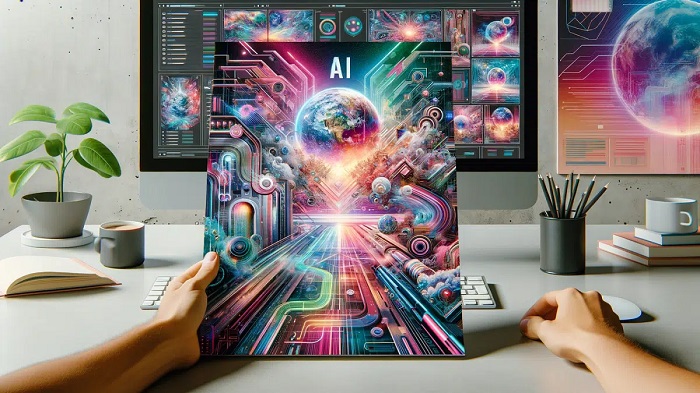
AI-powered image generators are rapidly gaining popularity.
The commercial landscape for AI image generators shifted meaningfully in 2026, and not just because the outputs got better. The more significant change is legal and structural: clearer licensing terms, more platforms offering commercial rights as a standard feature rather than a premium add-on, and a growing body of case law that gives businesses slightly more confidence about what they can and can’t do with AI generated images. A year ago, using AI imagery in a client campaign felt like a calculated risk. For many studios and agencies, it now feels like a deliberate choice.
What actually changed with commercial rights
The early days of this category were messy on the ownership question. Midjourney’s terms, Stability AI’s terms, Adobe’s terms — they all differed, updated frequently, and contained enough ambiguity that legal teams at larger companies simply avoided the category entirely. That friction has reduced. Most major platforms now have explicit commercial licensing tiers, and the distinctions between personal and commercial use are more plainly stated.
Midjourney’s paid plans include commercial rights as standard. Adobe Firefly, built on licensed and proprietary training data, positions commercial safety as its core differentiator — and that positioning has resonated with enterprise clients who need indemnification, not just capability. DALL-E 3, accessed through ChatGPT or the API, grants usage rights to the output by default. Flux, which gained significant ground in 2025, has models available under licenses that allow commercial use depending on which variant you’re running.
The practical upshot: if you’re using a reputable paid tier, commercial use is generally permitted. The murkier territory is free AI image generator access, where terms vary and output volumes are restricted enough that commercial reliance is risky anyway.
How creative workflows have actually adapted
The interesting story isn’t that AI replaced illustrators or photographers — that narrative turned out to be significantly overstated, at least at the high end. What happened instead is more granular. AI image generators absorbed specific stages of creative work that were previously bottlenecks: concept visualization, mood board generation, rapid iteration on art direction before committing budget to a shoot or an illustrator brief.
A creative director who previously spent two weeks aligning with a client on visual direction before engaging a photographer can now generate fifty directional images in an afternoon, get approval on a mood and palette, and go into production with a much tighter brief. The photographer’s job didn’t disappear — it became better defined. That’s the real workflow change for mid-to-large agencies.
At the independent and small business end, the shift is more disruptive. A solo entrepreneur who previously couldn’t afford custom imagery for their brand now can produce consistent, on-brand visuals without a design budget. That’s genuinely democratizing, though it has also made the visual internet considerably more homogeneous in ways that skilled art directors are starting to actively work against.
The gap between platforms that matters in 2026
Prompt quality still drives output quality, but the variance between platforms on the same prompt has narrowed. What differentiates tools now is less raw image quality and more workflow integration and control. The AI photo generator category has matured to the point where Midjourney, Flux, Ideogram, and Leonardo AI all produce impressive results — the question is which fits how you actually work.
Midjourney remains the preference for painterly, stylized output and has the strongest community-driven prompt culture. Ideogram punched above its weight on typography integration, which sounds niche until you need it. Leonardo AI offers fine-grained control over models and styles that appeals to users who want more than a black box. Adobe Firefly’s advantage is pipeline: if your team lives in Creative Cloud, the integration removes friction that matters at volume.
The AI picture generator market also bifurcated between tools optimized for one-off creative output and tools built for production pipelines. If you’re generating ten images for a campaign, almost any capable tool works. If you’re generating ten thousand product images for an e-commerce catalogue with consistent lighting, background, and angle requirements, you need something built with batch workflows and API access in mind.
What the creative industry is actually grappling with
Style imitation remains the unresolved tension. The tools are technically capable of producing work that closely references a living artist’s distinctive style — and some users do this, despite most platforms having policies against it. The ethical debate hasn’t produced consensus, and the legal debate has produced less than enthusiasts on either side expected. What’s clear is that studios with strong reputations are increasingly explicit about their AI use policies, partly for transparency and partly because clients are asking.
There’s also the quality ceiling question. For certain categories — photorealistic product shots, lifestyle imagery with specific demographic representation, highly technical illustrations — human-directed photography and illustration still produces more reliable results than AI generation. The AI picture generator tools are closing this gap, but it’s not closed. Knowing where the ceiling still sits is part of using the category intelligently.
For anyone mapping the current landscape of tools by capability, pricing, and commercial terms, orbitarai is a practical reference that covers the category without the hype.